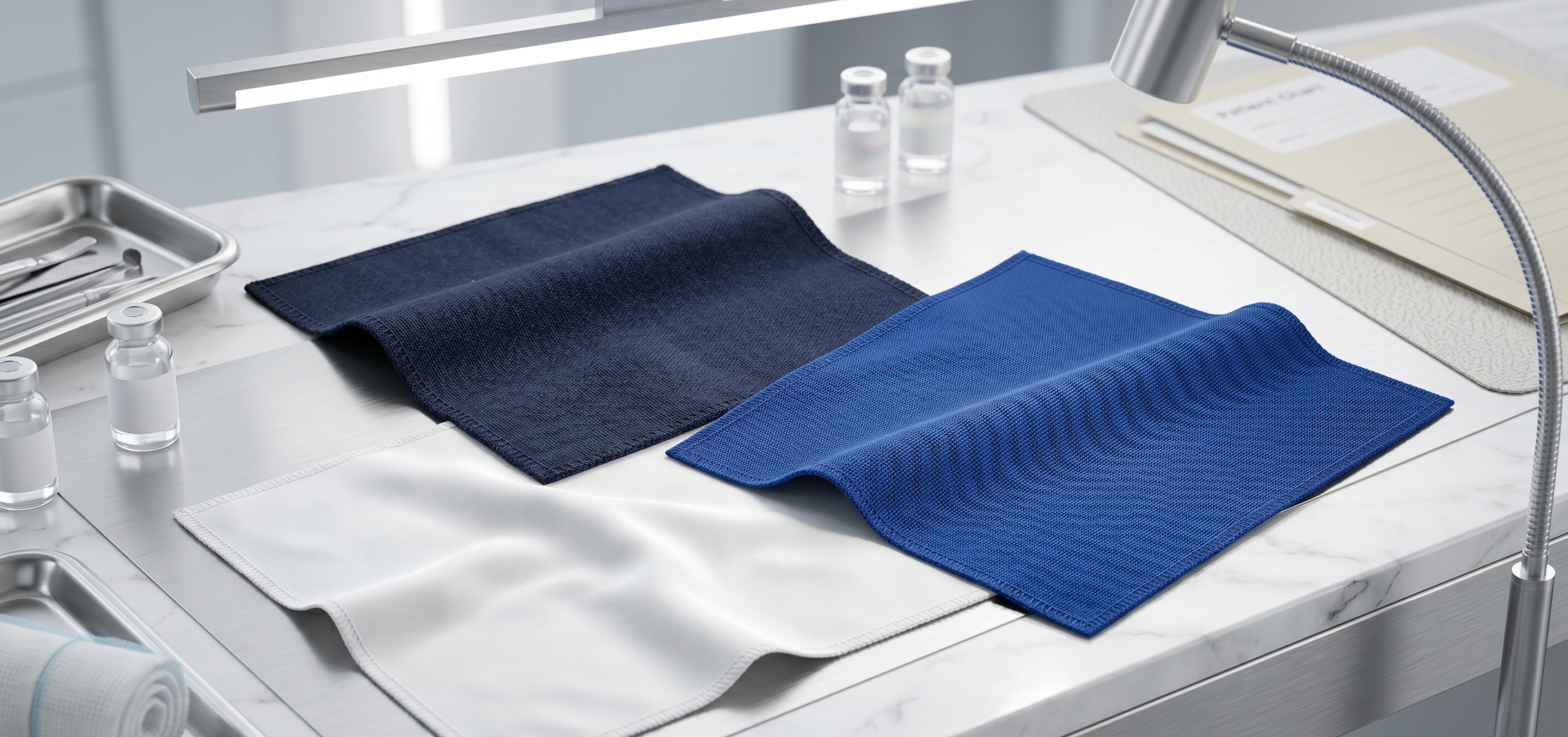
Choosing the best material for scrubs affects comfort, durability, and care—this scrub fabric guide compares cotton, polyester, and rayon (plus common blends) so you can pick the right scrubs for your role and shifts.
Quick Verdict: Which Material Wins?
When deciding on the best fabric, the winner depends heavily on your specific clinical environment and daily physical demands. Blended fabrics consistently outperform 100% natural or 100% synthetic garments by combining the strengths of multiple fibers while neutralizing their individual weaknesses.
If you prioritize maximum comfort and breathability, a cotton-rich blend is your best option. However, if your top priority is durability and low-maintenance care, a polyester-spandex blend offers the resilience and stretch needed for demanding, high-intensity shifts.
Fabric Fundamentals: What Each Fiber Is
Understanding the core fibers used in medical apparel is the first step to building a wardrobe that supports your workflow.
Cotton: Natural Comfort and Breathability
Cotton is a universally recognized natural fiber celebrated for its unparalleled softness and skin-friendly properties. Natural breathability is its primary advantage, making it highly effective at allowing air circulation in hot clinical environments across the Saudi market. It is also highly absorbent, which means it handles sweat well but can feel damp during extremely active shifts. The main drawbacks of 100% cotton are its tendency to shrink in hot washes and its susceptibility to wrinkles, often requiring regular ironing.
Polyester: Synthetic Durability and Low Maintenance
Polyester is a highly engineered synthetic fiber designed for maximum resilience. Exceptional durability is its defining characteristic, allowing it to withstand high-frequency laundering without losing its shape or colorfastness. Modern polyester is often treated to be moisture-wicking, actively pulling sweat away from the body rather than absorbing it. It shines in busy hospitals where bulk scrubs for teams must endure rigorous industrial washing while remaining totally wrinkle-free.
Rayon: Semi-Synthetic Softness and Drape
Rayon (often labeled as viscose) is a semi-synthetic fiber derived from purified cellulose, typically wood pulp. Silk-like softness is its greatest benefit, providing a luxurious drape and a smooth, cooling sensation against the skin. It is more breathable than standard polyester, making it ideal for high-end aesthetic clinics or shorter shifts where appearance is paramount. However, rayon can weaken when wet and is prone to wrinkling, meaning it requires gentler care compared to robust synthetics.
What “Blend” Means and Why They Exist
A blend weaves two or more of these fibers together to create a superior fabric. Blending maximizes performance by uniting cotton’s breathability, polyester’s strength, and rayon’s softness, creating the ultimate medical garment.
Performance Comparison: Comfort, Durability, Care, and Cost
To find the ideal uniform, we must evaluate how these fabrics perform across the metrics that matter most to healthcare professionals.
Comfort & Breathability
Cotton offers excellent thermoregulation and a familiar, cozy tactile feel. Rayon provides a distinctly cooling touch and a lightweight drape. However, advanced polyester blends offer superior moisture management, keeping you comfortably dry rather than sweat-soaked during high-stress procedures.
Stretch, Recovery, and Fit
Pure cotton, polyester, and rayon lack natural elasticity. The addition of spandex (elastane) is what provides crucial 4-way stretch and bagging resistance. This stretch ensures full mobility and prevents the fabric from sagging at the knees or elbows after hours of wear.
Durability & Colorfastness
Polyester is highly resistant to abrasion and seam stress. Unmatched color retention means polyester-heavy [rayon blends] won’t fade into dull shades after months of heavy washing, whereas cotton tends to lose its dye vibrancy much faster over time.
Maintenance & Laundering
Time is money, and polyester dominates the low-maintenance category. Wrinkle-free convenience and rapid drying times make synthetic blends ideal for busy professionals. Cotton and rayon carry a higher shrink risk and typically demand lower wash temperatures and occasional ironing.
Cost & Value Over Time
While 100% cotton might have a lower upfront price, it requires replacement more frequently due to wear and fading. Higher lifetime value is found in premium synthetic blends, which maintain their professional appearance and structural integrity for years.
Scrub Fabric Quick-Compare
| Feature | Cotton | Polyester | Rayon | Common Blends |
| Breathability | High | Low to Moderate | High | High |
| Durability | Moderate | High | Moderate | Very High |
| Wrinkle Resistance | Low | High | Low | Moderate to High |
| Stretch (w/ Spandex) | Moderate | High | High | Superior |
| Care Ease | Moderate | Very Easy | Delicate | Easy |
| Best For | Hot climates | ER / High-frequency wash | Aesthetic clinics | Daily all-day use |
Best Blends and When to Choose Them
Polyester-Cotton Blends (Poly-Cotton): Everyday Balance
Typically a 65% polyester and 35% cotton mix, this is the reliable standard for everyday medical wear. Dependable wrinkle resistance meets comfortable breathability, making it the perfect, cost-effective choice for bulk institutional purchases and standard daily laundering.
Polyester-Rayon Blends: Softer, Polished Look
Combining polyester’s strength with rayon’s elegant drape results in a sophisticated uniform. Enhanced professional appearance makes this blend highly sought after for retail-facing environments and private clinics where staff must look impeccable.
Polyester-Spandex and Rayon-Spandex: Stretch-Focused
When agility is mandatory, blends featuring 3% to 7% spandex are the answer. Unrestricted mobility and recovery allow active professionals to move freely. These stretchy scrub sets are the top choice for modern, athletic-fit medical wear.
When to Avoid Blends
If you have severe synthetic allergies or work in highly specialized, heat-sensitive roles (like certain laboratory environments), pure natural fibers may be required by safety regulations.
Role-Based Recommendations: Which Material for Your Job
Nurses & ER Staff
Emergency rooms demand maximum resilience and fluid resistance. We highly recommend durable polyester-spandex blends for these roles, as they are the best scrubs for long shifts, offering the mobility and quick-drying properties needed for 12-hour rotations.
Physical Therapists & Active Clinicians
Your job is physically demanding and requires constant movement. Higher-spandex blends (5-7%) provide the necessary flexibility for lifting and assisting patients, while polyester ensures excellent moisture control.
Dentists & Dental Staff
Dental professionals require garments that resist stains and withstand frequent laundering. Poly-rayon blends are ideal here, providing an easy-to-clean surface with a polished, crisp look suitable for patient consultations.
Estheticians & Cosmetic Clinics
Aesthetic environments prioritize a luxurious, calming atmosphere. Rayon-heavy blends offer a beautiful, soft drape that looks upscale and feels incredibly comfortable during focused, shorter treatments.
Care and Maintenance: Keep Scrubs Performing
Washing Best Practices
To preserve your fabrics, always utilize cool or warm washes on a gentle cycle. Using mild detergents without optical brighteners protects color integrity, while avoiding fabric softeners ensures moisture-wicking properties aren’t compromised.
Drying, Ironing, and Avoiding Heat Damage
Heat is the enemy of synthetic stretch fibers. Tumble drying on low heat prevents spandex from melting or snapping, and keeps rayon blends from shrinking or weakening over time.
Stain Removal and Repair Tips
Extend the life of your scrubs by utilizing immediate spot treatments for biological stains. Reinforcing stressed seams with a quick stitch prevents minor snags from turning into full garment replacements. Check out our full guide on how to care for scrubs for more details.
FAQs
What is the most comfortable material for scrubs?
Most professionals find polyester-rayon-spandex blends to be the most comfortable, as they combine a silky soft drape with breathable, 4-way stretch.
Are polyester scrubs less breathable than cotton?
Basic polyester is less breathable, but modern engineered performance polyester is actually superior at wicking sweat away from the body to keep you cool and dry.
How much spandex is too much in a scrub blend?
Generally, 3% to 7% spandex is ideal. Anything over 10% can make the fabric feel too much like activewear and may lose its professional structural shape.
Do rayon scrubs shrink or weaken in the wash?
Yes, rayon is more delicate when wet and can shrink if exposed to hot water or high-heat drying. Always wash rayon blends in cool water.
Which fabric is best for hot climates?
In hot climates, lightweight poly-cotton blends offer great airflow, while moisture-wicking polyester-spandex blends are excellent for managing sweat.
Are wrinkle-free scrubs always polyester blends?
Almost always. Polyester’s inherent resistance to creasing is what gives wrinkle-free medical wear its low-maintenance, ready-to-wear appeal.