Antimicrobial scrubs are treated or engineered to slow microbial growth and reduce odors, but they’re not a substitute for infection‑control practices—this guide explains the technology, evidence, and who benefits most.
In fast-paced clinical environments across Saudi Arabia, Egypt, and the UAE, the demand for high-performance medical apparel has surged. Manufacturers increasingly market antibacterial medical scrubs as the ultimate solution for workplace hygiene. However, navigating these claims requires separating genuine fabric technology from marketing hype. Understanding the precise mechanisms, benefits, and limitations of these garments empowers healthcare professionals and procurement teams to make evidence-based decisions about their clinical wardrobes.
Quick Answer: Are Antimicrobial Scrubs Necessary?
Short Verdict for Busy Readers
They are highly beneficial but rarely strictly mandatory. Hygienic scrubs offer a scientifically proven secondary layer of defense against fabric degradation and odor-causing bacteria, making them an excellent investment for individual comfort, though they do not replace standard hospital sanitation protocols.
When They Add Value and When They Don’t
These garments deliver immense value in high-intensity roles where clinicians experience heavy sweating or frequent exposure to non-sterile environments. Conversely, they offer negligible clinical advantages in strictly controlled surgical settings, where sterile, single-use gowns are the primary barrier.
What “Antimicrobial” Means for Scrubs (Technology Primer)
To evaluate whether to upgrade your daily uniform, you must first understand how this specific textile technology functions on a microscopic level.
Types of Antimicrobial Technology
Medical apparel manufacturers utilize two distinct methods to create antimicrobial textiles. Topical finishes are chemical coatings applied to the fabric surface—often utilizing silver ions, copper, or zinc pyrithione—after the garment is woven. In contrast, embedded technologies integrate these active biocidal agents directly into the synthetic polymer fibers before weaving, ensuring the protective qualities are structurally permanent.
How They Work
The primary mechanism of these agents is biological disruption. The technology actively damages bacterial cell walls, effectively inhibiting their ability to multiply and colonize on the fabric’s surface. By significantly reducing this overall bioburden, the fabric naturally controls odors, as mid-shift smells are primarily generated by bacteria breaking down human sweat.
Performance Claims
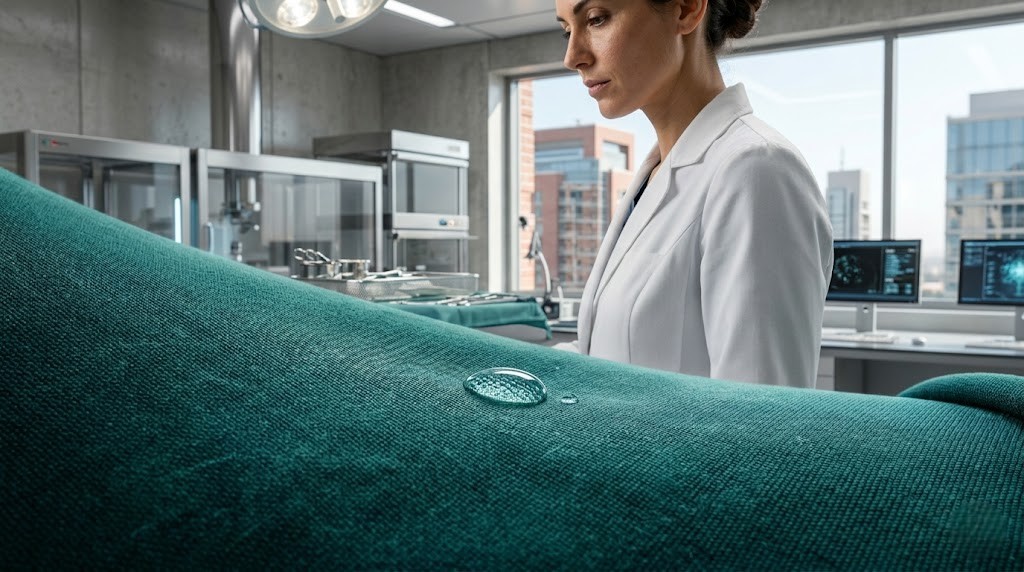
It is vital to distinguish between microbial reduction and fluid protection. Antimicrobial treatments do not create a fluid-impermeable barrier. While they successfully reduce surface microbes, protecting the wearer from blood or chemical splashes requires a completely different hydrophobic (water-repellent) coating applied to the textile.
Longevity of Treatment
The lifespan of your garment’s protective properties depends entirely on its manufacturing process. Topical finishes gradually degrade with intense laundering, often losing their maximum efficacy after 50 to 100 industrial wash cycles. Integrated fiber technologies, however, maintain their structural antimicrobial strength for the entire functional life of the uniform.
What the Evidence Says: Benefits and Limitations
When evaluating infection-control apparel, clinical data provides the clearest picture of what these advanced fabrics can actually achieve.
Studies Showing Reduced Apparel Bioburden
Peer-reviewed clinical evidence strongly supports the core technological claims. Controlled studies consistently demonstrate significantly lower bacterial counts (including pathogens like MRSA and VRE) on antimicrobial textiles compared to standard untreated cotton or polyester blends worn under the exact same conditions.
Studies Showing Limited Effect on Infection Rates
However, a cleaner uniform does not automatically equate to better patient outcomes. Reduced apparel bioburden has not been proven to lower Hospital-Acquired Infection (HAI) rates. Evidence indicates that scrubs recontaminate rapidly upon contact with hospital surfaces, meaning the fabric’s ability to inhibit bacteria is frequently outpaced by continuous environmental exposure during a shift.
Real-World Factors That Affect Performance
Laboratory environments rarely account for the physical chaos of an emergency room. Heavy physical soiling severely dampens antimicrobial efficacy, as blood, heavy sweat, or protein spills create a physical barrier over the active agents, temporarily neutralizing their effects until the garment is thoroughly laundered.
Infection-Control Context
These high-tech garments represent a supplementary tool, not a primary shield. They must never replace core hygiene practices, such as rigorous handwashing, the use of disposable PPE, or sterile technique. They are designed to protect the fabric and the wearer’s comfort, rather than acting as a direct sterile barrier for the patient.
Practical Pros & Cons Checklist
Key Advantages
- Lower microbial load on fabric surfaces: This actively reduces the localized risk of uniform-to-surface cross-contamination.
- Exceptional odor control: Inhibiting bacterial growth keeps you feeling and smelling fresher during extended, high-stress shifts.
- Extended wearability: Clinicians often experience a longer comfortable duration between necessary, smell-driven uniform changes.
- Enhanced fabric longevity: Many of these specialized finishes also resist mildew and stains, making garments easier to clean.
Key Limitations
- Not a sterile barrier: They are not inherently “sterile” and are not a replacement for hand hygiene or isolation PPE.
- Degradation risks: The effectiveness of topical coatings can sharply decline with aggressive laundering, wear, and heavy soiling.
- Higher initial cost: Premium treated fabrics carry a higher price tag than basic uniforms, and warranty claims vary by brand.
- Regulatory considerations: Certain chemical biocides face environmental scrutiny; always check local institutional rules regarding treated textiles.
Who Should Consider Antimicrobial Scrubs?
High-Exposure Roles That May Benefit
For ER nurses, ICU staff, and infectious-disease specialists, these garments are highly recommended. They serve as a helpful, comforting adjunct in environments where frequent physical contact and high ambient pathogen loads are unavoidable daily realities.
Long-Shift and Odor-Sensitivity Use Cases
EMS personnel and floor staff working back-to-back rotations will find these incredibly beneficial. The reliable odor control is a major quality-of-life upgrade, especially when these uniforms are layered seamlessly over moisture-wicking Underscrubs that manage sweat at the skin level.
Not Necessary for Low-Risk or Strictly Sterile Environments
If your workflow requires strict cleanroom protocols, these garments are an unnecessary expense. They add negligible value in an operating room sterile field, where your primary outer layer is always a disposable gown or specialized sterile equipment.
Team Procurement Considerations
For administrators outfitting a large department with premium Men’s Scrubs or tailored Women’s Scrubs, careful evaluation is required. We highly advise ordering sample trials to verify laundering durability and assess staff comfort before committing to a clinic-wide uniform replacement.
Buying, Care, and Compliance Tips
What to Look for When Buying
Do not blindly trust basic marketing labels. Demand verified antimicrobial testing results (such as AATCC standards), check the exact fabric composition, and ensure the manufacturer’s claims align with your facility’s specific compliance guidelines. This applies to all garments, from specialized jackets to everyday Printed Scrubs used in pediatric wards.
Laundering & Care
Proper maintenance dictates the lifespan of the treatment. Always follow the vendor’s specific laundering recommendations. Some finishes tolerate industrial washing well, but harsh chemicals like chlorine bleach or industrial fabric softeners will permanently degrade topical antimicrobial coatings.
Policy & Labeling
Before initiating a bulk purchase, review your local infection-control policies. Some employers strictly prohibit certain treated textiles due to chemical sensitivities or environmental runoff concerns. Ensure you keep the Material Safety Data Sheet (MSDS) or tech sheets on file for compliance audits.
Cost vs. Benefit Analysis
Mitigate financial risk by implementing a phased approach. Trial small batches first to measure actual odor reduction and staff satisfaction, determining if the premium cost provides a tangible return on investment for your specific clinical setting. Even professional Lab Coats with antimicrobial treatments should be tested for durability under your facility’s specific laundry conditions.
FAQs
Do antimicrobial scrubs kill COVID‑19 or other viruses on contact?
While some treatments show reduced viral survival in controlled lab tests, they do not kill viruses instantly and are absolutely not a substitute for proper PPE and strict surface disinfection.
Will antimicrobial scrubs make laundering unnecessary?
No. Routine laundering following your specific facility protocol is still strictly required to remove physical soil, body oils, and biological fluids.
Are antimicrobial finishes safe for skin?
Generally, yes. Most medical-grade treatments are safe for daily wear, but clinicians with severe contact dermatitis or specific chemical sensitivities should review the active agents before wearing them.
Do antimicrobial scrubs need special washing?
Often, yes. To preserve the longevity of the treatment, you must follow specific vendor care instructions, which typically advise against using harsh fabric softeners or chlorine bleach.
Do they prevent hospital‑acquired infections (HAIs)?
The evidence is mixed. While they successfully reduce apparel bioburden, they alone do not guarantee lower HAI rates and must be utilized as part of a broader hand-hygiene and sanitation protocol.