The foundation of exceptional patient care begins from the ground up. In the relentless, high-stakes environment of a healthcare facility, medical professionals are industrial athletes, executing complex maneuvers, walking miles across concrete floors, and standing for grueling periods without respite. Amidst the chaos of rapid-response codes and continuous patient monitoring, the apparel you wear plays a monumental role in your physical endurance. While much attention is rightly placed on advanced, flexible uniforms, the most critical element of your professional armor is often the most neglected: your footwear. Wearing inadequate, poorly engineered shoes is not a minor inconvenience; it is a profound biomechanical liability that slowly compromises your physical health, energy levels, and clinical focus. Navigating long shifts requires equipment that absorbs kinetic shock, provides unyielding stability, and shields you from the inherent hazards of the hospital floor. Finding the absolute best shoes for nurses is a strategic necessity that directly dictates your career longevity. Since 2001, Apex has rigorously studied the biomechanical demands placed upon Egyptian healthcare workers, evolving from a trusted local brand into an industry leader with 13 premium retail locations. We understand that eliminating physical distractions is the key to maintaining absolute clinical excellence. This comprehensive guide will dissect the devastating anatomical effects of improper footwear, the science behind elite ergonomic design, and precisely how to upgrade your wardrobe with the ultimate foundation for enduring comfort.
The Physical Reality of Long Shifts on the Hospital Floor
To fully grasp the magnitude of footwear in the medical field, one must first analyze the extreme physical realities of a standard clinical rotation. The hospital environment is unforgiving on the human musculoskeletal system.
The Concrete Challenge
Modern hospitals and private clinics are vast architectural expanses built upon solid concrete slabs, typically overlaid with thin linoleum or terrazzo tiles. These surfaces offer absolutely zero kinetic absorption. Every single time your heel strikes the ground, the impact force—which can be up to three times your total body weight when walking briskly—is sent directly upward through your skeletal structure. Over the course of a 12-hour rotation, a nurse can easily walk between four and five miles. Without a dedicated barrier to absorb this immense shock, the microscopic trauma to your joints accumulates rapidly, leading to severe, chronic foot pain and profound systemic fatigue.
The Static Standing Phenomenon
While walking is exhausting, static standing is often far more destructive to the lower extremities. Surgeons, scrub nurses, and dental hygienists frequently stand in fixed, unnatural positions for hours on end. When you remain stationary, the muscles in your legs are continuously contracted to maintain balance, severely restricting venous blood flow back to the heart. This pooling of blood causes significant swelling (edema) in the feet and lower legs. Improper footwear that lacks a rigid, supportive structure allows the arches of the feet to collapse under this prolonged static pressure, placing immense strain on the plantar fascia and the Achilles tendon.
Understanding How Footwear Impacts Your Posture and Spine
The human body operates as an intricate, interconnected kinetic chain. The alignment of your entire skeletal structure is entirely dependent upon the foundational stability provided by your feet.
The Ripple Effect of Collapsed Arches
When you wear flat, unsupportive shoes, the medial arch of the foot gradually flattens during long shifts. This collapse forces the ankle to roll inward—a condition known as overpronation. Because the kinetic chain is linked, an inward-rolling ankle forces the tibia (shin bone) and the femur (thigh bone) to rotate internally. This unnatural rotation places immediate, painful stress on the medial meniscus of the knee joint and severely misaligns the hip pelvis.
The Ultimate Consequence: Lower Back Pain
Once the pelvis tilts forward to compensate for the collapsing lower extremities, the natural curvature of the lumbar spine is exaggerated. This poor posture forces the muscles of the lower back into a state of continuous, painful spasm. What originally began as localized foot pain inevitably transforms into chronic, debilitating lower back pain. Investing in footwear with rigid, anatomically correct arch support corrects this overpronation at the source, realigning the knees and hips, and allowing the spine to rest in its natural, neutral posture. When your posture is aligned, your chest opens up, your breathing deepens, and your physical stamina is drastically increased.
Why Standard Sneakers Fail in the Medical Environment
A common and highly destructive mistake made by new healthcare professionals is relying on standard, everyday athletic sneakers for clinical work. While a premium running shoe is excellent for a forward-motion sprint, it is entirely unsuited for the multidirectional, hazardous reality of a hospital ward.
The Hazard of Porous Materials
Standard athletic sneakers are typically constructed from breathable, porous mesh to keep a runner’s feet cool. In a clinical setting, this porous mesh is a severe biological hazard. Hospitals are rife with accidental spills—from harsh chemical disinfectants and iodine to blood and other biological fluids. A mesh sneaker absorbs these hazardous liquids instantly, exposing your skin to dangerous pathogens and permanently ruining the shoe.
Inadequate Soles for Hazardous Surfaces
Running shoes feature outsoles designed to grip rough asphalt, not polished hospital linoleum. When polished floors become wet from a spilled IV bag or a freshly mopped corridor, an athletic sneaker becomes a dangerous slip hazard. Furthermore, the soft EVA foam used in running shoes is designed to compress rapidly. When subjected to the sustained static weight of a 12-hour shift, this soft foam bottoms out completely, leaving the practitioner walking essentially barefoot on concrete for the remainder of their rotation.
Essential Features of the Best Shoes for Nurses
Identifying elite, high-performance medical shoes requires looking beyond surface aesthetics. True clinical footwear is a piece of specialized engineering that must meet strict anatomical and environmental criteria.
- Exceptional Arch Support: A premium medical shoe features a structured, contoured footbed that aggressively supports the medial and lateral arches. This prevents the foot from flattening and maintains perfect kinetic alignment throughout the day.
- Slip-Resistant Outsoles: The outsole must feature a specialized, high-friction rubber compound with a complex, channeled tread pattern. This geometry is specifically engineered to aggressively channel liquids away from the center of the shoe, providing unshakeable grip on slick, wet linoleum.
- Fluid-Repellent Uppers: The exterior of the shoe must be constructed from dense, non-porous materials such as high-grade EVA rubber, treated leather, or advanced synthetic polymers. This ensures that any biological or chemical spill beads up and rolls off the surface entirely.
- A Generous Toe Box: As the shift progresses, gravitational forces and restricted blood flow cause the feet to swell significantly. A proper clinical shoe features a wide, accommodating toe box that allows the toes to splay naturally without painful compression or blistering.
- Effortless Sanitization: Infection control is paramount. The ideal shoe features a smooth, seamless exterior that can be rapidly wiped down and sterilized with harsh hospital-grade disinfectant wipes between patient rooms.
The Rise of Nursing Clogs: A Clinical Staple
When evaluating the apex of clinical footwear, one specific style continually dominates hospital corridors across the globe: the medical clog. For decades, nursing clogs have been the undisputed champion of the healthcare wardrobe, and their enduring popularity is rooted in uncompromising utility.
Why the Clog Silhouette is Superior
The clog design is a masterpiece of clinical efficiency. First, the lack of laces eliminates a major contamination vector; shoelaces drag on unsanitary floors and absorb fluids, requiring the practitioner to touch contaminated strings to tie them. A clog offers a seamless, hands-free slip-on experience. Secondly, clogs are typically molded from a single piece of high-density EVA rubber. This construction provides an incredibly robust, protective shell against falling sharps, such as dropped scalpels or heavy medical instruments, while remaining phenomenally lightweight.
Strategic Heel Elevation
Premium clogs feature a slight elevation in the heel relative to the toe. This subtle pitch shifts the wearer’s center of gravity slightly forward, reducing the strain on the Achilles tendon and encouraging a more dynamic, forward-moving posture that severely reduces lower back fatigue during long shifts.
Featured Apex Medical Footwear
Experience the ultimate relief during intense rotations with our meticulously engineered footwear designed for healthcare heroes.
This specialized shoe integrates superior shock absorption to effortlessly mitigate joint impact on hard hospital floors.
You will instantly elevate your daily clinical performance while maintaining a highly professional, immaculate appearance.
Step confidently into your workplace with an advanced slip-resistant sole that guarantees absolute stability and protection.
The highly durable, fluid-repellent material effortlessly resists biological spills to keep your feet perfectly dry.
Invest in superior clinical footwear today and redefine your foundational standard for resilient, uncompromising elegance.
Coordinating Your Footwear with Premium Medical Apparel
Achieving absolute professional excellence requires a holistic approach to your clinical wardrobe. Your footwear must operate in seamless synergy with your high-quality medical uniforms to create a polished, authoritative image that commands immediate respect from patients and peers alike.
The Aesthetic of the Modern Practitioner
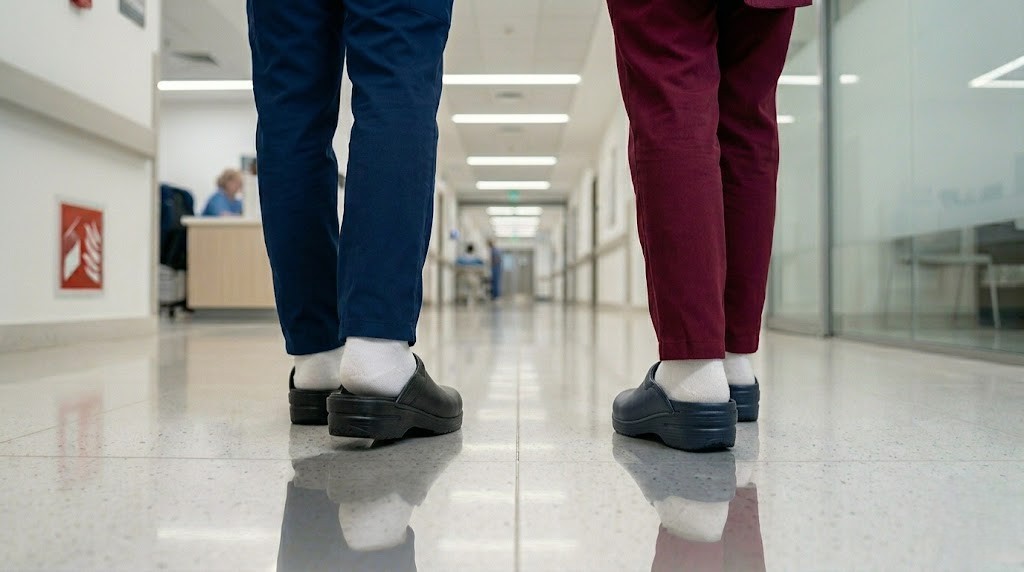
Gone are the days when medical clogs were viewed as clunky, unfashionable necessities. Today’s premium footwear is sleek, minimalist, and designed to perfectly complement tailored, high-fashion medical apparel. When styling your uniform, pairing a deep, rich dark blue medical crocs set with matching dark navy scrubs creates a highly sophisticated, elongated, and slimming silhouette that projects undeniable executive authority.
Harmonizing Colors for Departmental Codes
If your facility mandates a specific color code, utilizing neutral footwear is a highly strategic choice. A pristine pair of grey medical crocs seamlessly bridges the gap between various uniform colors. Grey footwear pairs beautifully with vibrant surgical greens, deep burgundies, or soft pediatric pastels without clashing. Whether you are outfitting your clinic with premium women’s medical scrubs or highly tailored men’s medical scrubs, grounding the outfit with flawlessly coordinated, pristine footwear elevates the entire presentation from basic compliance to elite professional fashion.
How to Transition to Proper Medical Footwear
If you have spent years wearing inadequate, unsupportive sneakers, transitioning to a highly structured, rigid medical shoe requires a strategic adjustment period.
The Necessary Break-In Period
High-quality orthotic footbeds are designed to aggressively support your arches. If the muscles and ligaments in your feet have weakened due to years of wearing flat shoes, introducing rigorous support will initially cause mild discomfort as the foot muscles are forced to realign and engage properly. Do not wear a brand-new pair of medical clogs for a full 12-hour shift on day one. Instead, wear them for three to four hours at a time, gradually increasing the duration over a two-week period. This allows the heat of your body to slowly mold the footbed to the unique contours of your foot, resulting in a custom, glove-like fit.
Monitoring the Replacement Cycle
Even the most advanced EVA rubber will eventually succumb to the relentless compression of a medical career. As a general rule, healthcare professionals who work full-time should replace their primary work shoes every six to eight months. If you notice horizontal compression lines forming deep within the midsole of the shoe, or if the slip-resistant tread pattern on the outsole begins to smooth out, the shoe has exhausted its functional lifespan. Continuing to wear a compressed, worn-out shoe completely negates its supportive benefits and reintroduces the risk of severe joint pain and slip hazards.
Comparing Common Shoe Types for Healthcare Workers
To fully understand the massive return on investment that premium clinical footwear provides, it is highly beneficial to compare the dominant shoe styles seen in hospitals side-by-side.
| Footwear Category | Fluid & Spill Resistance | Arch Support & Posture | Slip Resistance | Lifespan in a Hospital |
| Standard Running Sneakers | Extremely Poor (Porous Mesh) | Moderate (Compresses Quickly) | Low (Made for Asphalt) | 3 – 4 Months |
| Lifestyle/Casual Sneakers | Low (Canvas/Suede absorbs) | Very Poor (Flat insoles) | Very Poor (Slick soles) | 2 – 3 Months |
| Premium Nursing Clogs | Exceptional (Non-porous shell) | Excellent (Rigid, contoured) | Exceptional (Channeled tread) | 6 – 8 Months |
This data clearly illustrates that while standard sneakers may offer initial, superficial softness, they categorically fail in every essential metric required for survival and safety on a demanding clinical floor. The specialized clog remains the undisputed, scientifically superior choice.
The Long-Term Benefits of Investing in Your Feet
The decision to upgrade your clinical footwear extends far beyond the immediate relief of sore heels at the end of a shift. It is a profound investment in the longevity of your medical career and your overall quality of life.
Combating Professional Burnout
Physical exhaustion is a primary driver of professional burnout in the healthcare sector. When every step is an agonizing chore, your mental patience depletes rapidly, impacting your bedside manner, your reaction times, and your emotional resilience. By eliminating the systemic fatigue caused by poor posture and inadequate shock absorption, you conserve vital energy. This conserved energy allows you to remain sharply focused, highly empathetic, and exceptionally precise during the final, critical hours of your rotation.
Preserving Your Active Lifestyle
The damage inflicted by a 12-hour shift does not magically disappear when you clock out. Practitioners who wear terrible shoes frequently find themselves entirely incapacitated on their days off, suffering from intense plantar fasciitis, swollen ankles, and throbbing lower backs. They are unable to exercise, play with their children, or enjoy their personal time. Investing in elite footwear protects your musculoskeletal health, ensuring that you leave the clinic with enough physical vitality to fully engage in and enjoy your life outside the hospital walls.
Why Apex is Egypt’s Trusted Source for Medical Gear
When you are purchasing the essential equipment that directly dictates your daily physical endurance, the brand you trust is of paramount importance. Apex is not an importer of cheap, generic goods; we are a dedicated Egyptian institution with a legacy of uncompromising excellence dating back to 2001. Over the past two decades, we have listened intently to the needs of local doctors, nurses, dentists, and technicians, refining our products to meet the exact environmental and professional demands of the Egyptian healthcare sector.
Our continuous expansion to 13 retail locations across the country is a direct reflection of the unwavering trust the medical community places in our engineering. We know that an Egyptian practitioner faces intense climate variations, high patient volumes, and grueling hours. That is why every single product we offer—from our elite, 4-way stretch scrub collections to our impeccably engineered medical footwear—is designed to absorb the stress of your shift so that your body does not have to. We believe that financial constraints should never force a practitioner to suffer through a 12-hour marathon in restrictive, painful, low-quality gear. Do not let inferior footwear dictate your energy levels or compromise your clinical focus. Elevate your standard of practice, embrace the unparalleled comfort of true premium apparel, and step into your next shift with unshakeable confidence and ultimate protection.
Frequently Asked Questions (FAQ)
1. What are the absolute best shoes for nurses working 12-hour shifts?
The best footwear for extended shifts must combine rigid arch support to maintain posture, exceptional shock absorption to combat hard concrete floors, and fluid-repellent, slip-resistant exteriors. Premium medical clogs are universally recognized as the superior choice due to their specialized, protective, and ergonomic design.
2. Why do my feet hurt so badly after a long hospital shift?
Severe foot pain is typically caused by wearing shoes that lack proper arch support and kinetic shock absorption. Without these features, the repetitive impact of walking on hard linoleum causes the arches to collapse, severely straining the plantar fascia and causing debilitating inflammation by the end of the shift.
3. Are nursing clogs actually better than expensive athletic sneakers?
Yes, in a clinical setting, clogs are vastly superior. Athletic sneakers are made of porous mesh that absorbs hazardous biological fluids and features outsoles meant for asphalt. Clogs offer a protective, fluid-resistant shell, seamless wipe-down sanitization, and specialized slip-resistant treads explicitly designed for slick hospital floors.
4. How does wearing the wrong shoe affect my posture and cause back pain?
Improper shoes allow your foot’s arch to flatten, which forces your ankles to roll inward. This inward roll misaligns your knees and tilts your pelvis forward, creating an unnatural curve in your lumbar spine. This poor posture forces your lower back muscles into constant spasm, resulting in chronic back pain.
5. How often should healthcare workers replace their medical shoes?
For professionals working full-time, 12-hour shifts, medical shoes should be replaced every six to eight months. Over time, the sustained static weight crushes the EVA foam midsole, entirely destroying its shock-absorbing capabilities, even if the exterior of the shoe still looks perfectly fine.
6. What exactly makes a shoe slip-resistant on a hospital floor?
True slip resistance is achieved through a specific combination of a softer rubber compound that grips the floor and a complex, channeled geometric tread pattern. This tread acts like a car tire, channeling water, bodily fluids, and chemical spills out from underneath the shoe to maintain direct contact with the floor.
7. Do compression socks help with the foot pain caused by long shifts?
Yes, compression socks are an incredible complementary tool. While they do not replace the need for proper shoe arch support, they apply graduated pressure to the lower legs, which forces pooling venous blood back up to the heart. This drastically reduces painful swelling (edema) and leg fatigue over a 12-hour period.
8. How do I properly clean and sanitize my medical shoes?
If you are wearing premium EVA or rubber medical clogs, cleaning is effortless. Simply use a standard hospital-grade disinfectant wipe to thoroughly clean the exterior surface after every shift. For deep cleaning, you can wash them in a sink with cold water and mild soap, then allow them to air dry completely.