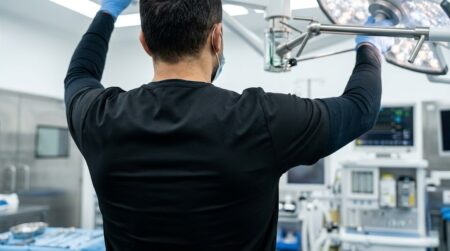
Navigating a demanding clinical environment is a test of physical and mental endurance, especially when the temperature begins to rise. Healthcare professionals operate in a unique, high-stress ecosystem where they frequently transition from the intense, sweltering heat of an outdoor emergency receiving bay to the aggressively chilled, heavily air-conditioned corridors of an intensive care unit. This constant environmental fluctuation, combined with the extreme kinetic energy required to lift patients, sprint to emergency codes, and perform intricate procedures, inevitably leads to significant perspiration. When your clothing traps this moisture, your uniform quickly transforms from a professional garment into a suffocating, heavy burden that distracts you from your critical duties. Established over two decades ago in the heart of Egypt, Apex understands that true clinical excellence begins with optimal physical comfort. Outfitting yourself with a premium breathable scrub fabric is not an extravagance; it is a fundamental requirement for maintaining your focus, hygiene, and stamina throughout an exhausting twelve-hour rotation. This comprehensive guide will dissect the science of clinical thermoregulation, expose the critical flaws in traditional medical textiles, and empower you to select the ultimate lightweight workwear that guarantees exceptional ventilation and unshakeable confidence on the clinic floor.
The Science of Clinical Thermoregulation
Before delving into the specific textiles that make up high-performance apparel, it is essential to understand how the human body regulates temperature and why the hospital environment inherently works against this natural biological process.
Why Does the Hospital Environment Cause So Much Sweating?
A healthcare facility is a uniquely challenging thermal environment. Medical professionals are industrial athletes whose basal metabolic rates spike repeatedly throughout a shift. Every time a nurse rushes down a hallway or a surgeon engages in a physically demanding operation under glaring surgical lights, the body generates excess thermal energy. To prevent overheating, the central nervous system triggers the sweat glands, releasing moisture onto the skin’s surface. In a perfect scenario, this moisture evaporates into the surrounding air, creating a cooling effect.
However, standard hospital protocols often disrupt this process. Practitioners are frequently required to wear heavy, non-porous isolation gowns, lead aprons for radiology, or multiple layers of personal protective equipment (PPE). These necessary safety barriers trap the hot, moist air close to the body, creating a suffocating microclimate. If your foundational uniform cannot actively manage this trapped moisture, you will experience rapid overheating, profound discomfort, and accelerated physical fatigue.
How Your Uniform Impacts Core Temperature
The clothing resting directly against your skin acts as the primary mediator between your body heat and the external environment. If your uniform is constructed from a fabric that absorbs and holds water, that moisture will sit heavily against your skin. Once the high-intensity activity ceases and you step into a cold, heavily air-conditioned charting room, that trapped, wet fabric will instantly drop your core temperature, causing a jarring, uncomfortable chill. Advanced textiles prevent this dangerous fluctuation by ensuring that your skin remains dry, allowing your body to maintain a stable, comfortable core temperature regardless of your activity level.
Decoding Common Medical Textiles: What Works and What Fails
The medical apparel industry utilizes a wide variety of fabrics, but not all are created equal when it comes to managing perspiration. Understanding the molecular characteristics of these materials is the key to building a wardrobe that thrives under pressure.
The Truth About the Traditional Cotton Blend
For generations, the standard hospital uniform was constructed entirely from cotton or a heavy cotton blend. Cotton is beloved for its natural softness and hypoallergenic properties, making it gentle on sensitive skin. However, in a high-perspiration environment, pure cotton is a severe liability.
Cotton fibers are highly hydrophilic, meaning they absolutely love water. A cotton uniform acts like a massive sponge, capable of absorbing up to 27 times its weight in liquid. When you sweat, the cotton absorbs the moisture but refuses to release it for evaporation. The result is a heavy, damp, and dark-stained uniform that clings uncomfortably to your body, severely restricting your range of motion and creating a breeding ground for odor-causing bacteria. While a small percentage of cotton can add softness to a garment, relying on it as the primary fiber during a sweaty shift is a tactical error.
The Power of Advanced Polyester and Synthetics
To combat the inherent flaws of natural fibers, premium medical brands have turned to advanced synthetic engineering. Modern polyester is nothing like the stiff, scratchy synthetics of the past. Today’s high-grade polyester is incredibly lightweight, exceptionally durable, and, most importantly, hydrophobic.
Hydrophobic fibers actively repel water. Instead of absorbing your sweat, advanced polyester pushes the moisture outward, distributing it across a vast surface area on the exterior of the garment. This rapid dispersion allows the clinical air conditioning to evaporate the moisture almost instantly. By incorporating these highly engineered synthetics, lightweight scrubs provide a protective, dry barrier that significantly enhances your daily endurance and overall comfort.
Elastane: The Key to Unrestricted Movement
While managing moisture is critical, surviving a long shift also requires dynamic mobility. When a uniform becomes damp with sweat, rigid fabrics tend to stick to the skin, causing severe chafing around the underarms, inner thighs, and waistline. To prevent this painful friction, elite apparel incorporates elastane (commonly known as spandex).
By blending elastane into the synthetic matrix, the fabric gains the ability to stretch in four distinct directions. This 4-way stretch ensures that the garment moves harmoniously with your body’s natural biomechanics, eliminating restrictive pulling across your shoulders and back while you execute physically demanding tasks.
What Defines a Truly Breathable Scrub Fabric?
The terms “breathability” and “moisture-wicking” are frequently used interchangeably in the apparel industry, but they refer to two entirely different scientific mechanisms. To survive the heat, you absolutely need both.
Understanding Moisture-Wicking Technology
Moisture-wicking refers strictly to the movement of liquid. Through a process called capillary action, microscopic channels engineered into the synthetic fibers act like tiny elevators, pulling liquid sweat away from your epidermis and transporting it to the outer face of the fabric. This technology is the first line of defense against the uncomfortable “swampy” feeling that plagues traditional uniforms during a busy rotation.
Strategic Ventilation and Micro-Perforations
Breathability, on the other hand, refers to the movement of air and vapor. A fabric is considered highly breathable if it allows the hot air generated by your body to escape outward, while simultaneously permitting cooler ambient air to flow inward.
The finest medical apparel achieves this through sophisticated weaving techniques. Rather than a dense, impenetrable weave, these fabrics feature subtle, microscopic perforations that facilitate continuous airflow without compromising the garment’s opacity. This constant ventilation is vital for keeping your skin cool and preventing the buildup of trapped thermal energy beneath your uniform.
Choosing the Ultimate Lightweight Scrubs for Summer
The blistering heat of an Egyptian summer introduces a whole new level of intensity to a healthcare shift. Commuting to the clinic, moving between hospital wings, and enduring occasional facility HVAC failures require a wardrobe specifically optimized for extreme heat.
What Makes Summer Scrubs Different?
When transitioning your wardrobe for the warmer months, you must seek out specifically designated summer scrubs that prioritize a drastically reduced fabric weight. These garments utilize finer, ultra-light synthetic yarns that provide all the protective coverage required by hospital regulations but feel virtually weightless against the skin. The reduction in overall fabric density means there is less material to trap heat, allowing for maximum thermal dissipation.
The Danger of “Too Thin” Materials
There is a delicate balance to strike when purchasing summer apparel. In the pursuit of ventilation, some budget manufacturers produce garments that are excessively thin, leading to disastrous consequences on the clinic floor. If a fabric lacks density, it becomes sheer and completely transparent under harsh fluorescent hospital lighting, destroying your professional image. Furthermore, overly thin materials lack the structural integrity required to withstand high-temperature industrial washing, resulting in rapid tearing and seam blowouts. Apex meticulously engineers its lightweight collections to guarantee absolute opacity and uncompromising durability, ensuring you stay exceptionally cool without ever sacrificing your authoritative clinical appearance.
Featured Medical Apparel Spotlight
Experience the unparalleled comfort of our exceptionally crafted clinical attire designed for demanding environments. This advanced garment features intelligent moisture management that actively pulls perspiration away from your skin. You will easily conquer your most grueling rotations while maintaining a flawless, professional appearance.
Elevate your daily performance with a tailored silhouette that guarantees absolute freedom and dynamic mobility. The sophisticated textile blend effortlessly resists wrinkles to keep you looking immaculate throughout the day. Invest in superior workplace apparel today and redefine your standard for resilient, highly functional elegance.
Overcoming the Elements: Strategic Layering for Sweat Management
It may seem counterintuitive to wear more clothing when you are trying to stay cool, but strategic layering is the secret weapon of veteran healthcare providers. The key is choosing the correct foundational pieces.
The Critical Role of the Base Layer
Wearing a tight-fitting, ultra-breathable undershirt acts as a dedicated sweat management system. A high-performance base layer immediately absorbs perspiration and wicks it away before it can saturate your primary uniform. This keeps your outer scrubs looking crisp, dry, and professional throughout your entire shift. It also provides a buttery-soft, frictionless barrier that protects your skin from chafing, which is a common issue when moving constantly in hot environments.
Managing Environmental Extremes
When you finally stop moving and sit down to update patient charts in a freezing administrative office, you need a versatile outer layer that provides warmth without causing you to sweat anew. The Ice Coat is an exceptional solution for these scenarios, offering a sleek, waterproof, and highly professional layer that protects you from the clinical chill while maintaining excellent internal breathability.
Fabric Care for Odor Control and Longevity
Investing in high-end, highly ventilated apparel means you must adopt a strategic laundry routine. When you sweat, your body releases proteins and lipids that bacteria feed upon. If these biological markers are not thoroughly cleaned from your high-performance fabrics, the garments will quickly develop a permanent, sour odor.
How to Wash Synthetics Without Ruining Them
Synthetic fibers are incredibly resilient, but they are highly sensitive to extreme heat. To preserve the micro-channels that provide moisture-wicking capabilities, always wash your uniforms inside out in cold water. Using hot water will slowly melt the elastane fibers, destroying the 4-way stretch and causing the garment to lose its tailored shape.
For professionals seeking ultimate hygiene and freshness, consider exploring advanced treatments like the Polyfresh extra service. This specialized antimicrobial finishing drastically reduces the proliferation of odor-causing bacteria on your garments, ensuring that you project a pristine, fresh aura from your first patient consultation to your final evening handoff.
The Golden Rule: Avoiding Fabric Softeners
If there is one absolute rule for washing athletic-inspired medical apparel, it is to banish liquid fabric softeners from your laundry room. Fabric softeners operate by coating clothing fibers in a microscopic layer of wax to make them feel artificially soft. When this wax coats a high-performance synthetic scrub, it completely clogs the microscopic perforations designed for ventilation and capillary action. A single wash with fabric softener will permanently destroy your garment’s ability to wick moisture and breathe, transforming your elite summer uniform into a suffocating plastic bag. Always use a high-quality, clean-rinsing liquid detergent instead.
Comparing Fabrics: Which One Wins the Sweat Test?
To make an informed purchasing decision, it is highly beneficial to see how different material compositions stack up against the rigorous demands of a sweaty, active clinical shift.
| Fabric Composition | Breathability Level | Moisture-Wicking Ability | Odor Resistance | Best Clinical Application |
| 100% Traditional Cotton | Moderate | Extremely Poor (Absorbs) | Low (Traps Bacteria) | Low-activity desk roles in cool clinics |
| Basic Poly-Cotton Blend | Low | Poor | Moderate | Standard budget-friendly institutional wear |
| Premium Poly-Spandex | Exceptional | Highly Advanced | High (With Treatment) | High-kinetic roles, ER, surgery, summer shifts |
| Rayon/Viscose Blends | High | Moderate | Low | Aesthetic clinics prioritizing soft drape |
Export to Sheets
When analyzing this data, it becomes glaringly obvious that a premium poly-spandex blend—such as the highly revered Trendi-Flex scrub—is the undisputed champion for surviving intense, perspiration-heavy shifts. It offers the exact combination of rapid evaporation, dynamic mobility, and continuous airflow required to keep a practitioner at the top of their game.
Why Apex Leads the Egyptian Market in Clinical Comfort
Selecting the appropriate attire for your medical career is not a decision to be taken lightly. Your uniform is your armor; it dictates your physical endurance, influences your psychological state, and communicates your expertise to every patient who walks through your door. Since our founding in 2001, Apex has been fiercely dedicated to understanding and solving the unique environmental and physical challenges faced by Egyptian healthcare heroes.
We recognize that working in the Middle East requires apparel that can withstand blistering summer heat waves while enduring the relentless, high-temperature sterilization processes required by local hospitals. Our continuous expansion to 13 retail locations across the country is a direct reflection of the unwavering trust the medical community places in our engineering. We do not mass-produce generic clothing; we craft sophisticated, high-performance professional gear. By refusing to compromise on fabric quality, sophisticated tailoring, and advanced thermoregulation technology, we ensure that every professional who wears our brand experiences unmatched comfort and elegance. Do not let inferior, suffocating fabrics dictate your energy levels or compromise your clinical focus. Elevate your standard of practice, embrace the revolutionary comfort of advanced textiles, and conquer your next grueling shift with absolute, unshakeable confidence.
Frequently Asked Questions (FAQ)
1. What exactly makes a scrub fabric breathable? A fabric is considered breathable when its weave structure allows for the continuous exchange of air. Advanced synthetic blends achieve this through microscopic perforations that permit the hot vapor generated by your body to escape outward, while simultaneously allowing cooler ambient air to flow inward to regulate your core temperature.
2. Why do I sweat so much more in 100% cotton scrubs? Cotton is highly hydrophilic, meaning it absorbs and holds onto moisture rather than letting it evaporate. When you sweat, the cotton acts like a sponge, becoming heavy and damp. This trapped moisture blocks airflow, causing your body to overheat further and triggering even more sweating.
3. What is the difference between moisture-wicking and breathability? Moisture-wicking is a mechanical process where the fabric pulls liquid sweat away from your skin and spreads it across the garment’s outer surface for rapid evaporation. Breathability refers to the fabric’s ability to let air and vapor pass through it. The best medical apparel utilizes both technologies simultaneously.
4. Are lightweight summer scrubs see-through? Cheap, low-quality summer scrubs often become sheer because they reduce the actual density of the yarn to save money. However, premium brands like Apex engineer lightweight fabrics using advanced, densely woven microfibers that guarantee complete opacity and professional modesty, regardless of how light the garment feels.
5. How do I stop my scrubs from smelling like sweat after a long shift? Odor is caused by bacteria feeding on trapped sweat. To prevent this, invest in moisture-wicking fabrics that keep you dry, wash your uniforms immediately after your shift using a strong, enzyme-based detergent, and consider garments treated with advanced antimicrobial finishes that actively resist bacterial growth.
6. Why should I absolutely avoid using fabric softener on my medical uniforms? Fabric softeners contain liquid waxes that coat the fibers of your clothing. When applied to high-performance synthetic scrubs, this wax permanently clogs the micro-channels responsible for wicking moisture and the perforations responsible for breathability, essentially ruining the advanced cooling technology of the garment.
7. Is polyester actually comfortable to wear during a 12-hour shift? Yes, but only if it is advanced, modern polyester. The cheap polyester of the past was notoriously rigid and suffocating. Today’s premium medical polyester is engineered to be incredibly soft, highly breathable, and is typically blended with elastane to provide dynamic 4-way stretch for ultimate comfort and mobility.
8. Can I wear long sleeves underneath my uniform without overheating? Yes, provided you choose the correct material. A tight-fitting, high-performance athletic base layer will actively wick sweat away from your skin, keeping you dry and preventing chafing. Avoid wearing standard cotton long-sleeve t-shirts, as they will trap heat and moisture, leading to severe discomfort.
9. Will high-performance stretch fabrics shrink in the washing machine? Premium synthetic blends featuring elastane are generally pre-shrunk and highly dimensionally stable. However, exposing them to the extreme heat of hot water washes or high-heat tumble drying can degrade the elastic fibers, causing them to lose their shape over time. Always wash in cold water to preserve the fit.
10. Can I physically feel the difference in these fabrics at an Apex store? Absolutely. Apex has been the premier outfitter for Egyptian medical professionals since 2001, and we currently operate 13 physical retail locations across the country. We highly encourage you to visit us in person to feel the exceptional lightness, softness, and stretch of our breathable collections before you buy.